
- Founder Led
- 12 Month Guarantee
- MVP Focus
- UK Based
Build A Startup MVP – But Don't Build The Whole Idea
Startup ideas don’t need a full product on day one. They need enough functionality to test MVP demand, gather user feedback, and prove the concept. Before launching, make
Trusted by UK businesses to build and grow online.
- Founder Led
- 12 Month Guarantee
- Fixed Pricing
- UK Based
COMMON STARTUP MISTAKES
Don't Inflate Your MVP – Most Startups Build Too Much, Too Soon
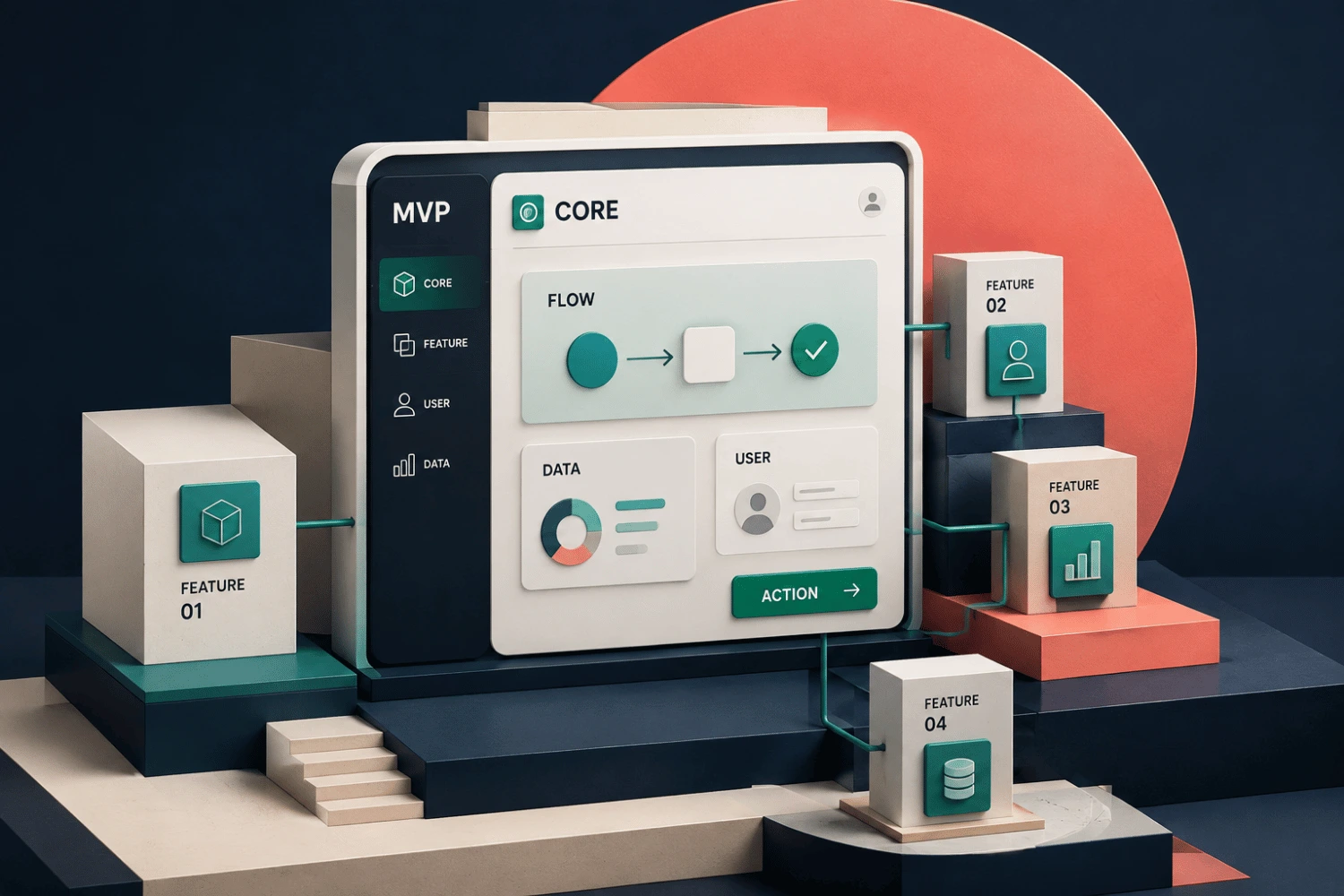
With your startup idea, more features do not mean a better product. Here's the reality – the longer you spend building, the longer you're relying on assumptions instead of real user feedback. A well-planned MVP helps you validate your core idea fast, reduce unnecessary costs, and determine if the idea can be a hit.
Building Big Before Validating
It’s tempting to jump straight into development and start building the full vision. The problem is that until real users interact with your product, everything is still an assumption. You need to test the concept, before building big.
Feature Creep
Avoid the “nice to have” features initially. Over time, new features get added, timelines grow and budgets increase. Build the main concept really well first – and then evaluate. Facebook wasn’t built initially with reels or marketplace.
Don't Guess. Take Analysis Deep
Founders know their ideas better than anyone, but take off the tinted shades. An MVP provides real-world feedback from real users, so don’t be afraid to analyse results in depth and have honest conversations.
Avoid Expensive Rebuilds
Rushing into a large build without validating the fundamentals can create technical debt, unnecessary complexity, and costly changes later. Starting lean helps create a stronger foundation that’s easier to improve, scale, and build upon.
Build Your MVP Smarter, Not Bigger
Learn quickly, reduce risk, and discover whether the idea deserves further investment. The startups that succeed aren’t always the ones that build the most — they’re the ones that learn the fastest.
THE SMARTER WAY TO LAUNCH
Launch Your Idea Smarter – Build A Lean MVP First
A Minimum Viable Product isn’t about cutting corners and launching fast. It’s about building the smallest version of your product capable of delivering value, gathering feedback, and proving demand. Done properly, an MVP helps founders make better decisions, reduce risk, and build future versions based on real-world evidence.
Validate Deman Early
Instead of spending months building every feature you can think of, an MVP allows you to launch sooner and find out whether people actually want the solution.
Reduce Development Costs
Building fewer features means lower initial development costs. Rather than investing heavily before validation, founders can focus resources on proving the concept.
Learn What Users Need
Some features will be loved, some may never be touched. Launching an MVP helps future development decisions to be driven by user behaviour and ultimately, value.
Build Investor Confidence
Whether you’re self-funded or seeking investment, traction speaks louder than ideas. An MVP gives you something tangible and real user data to back up funding conversations.
Launch Faster
The sooner your product reaches real users, the sooner you begin learning. An MVP shortens the path between idea and feedback, helping you move faster than competitors.
Build The MVP As A Foundation
A good MVP isn’t disposable. When planned correctly, the foundations can support future growth, additional functionality, and a full product roadmap.
Start Small, Learn Fast, Grow Your Idea Big
The goal isn’t to launch the biggest product possible. It’s to launch the smartest version first.
WHAT CAN AN MVP BE?
Real Digital Ideas. Just Smaller, Smarter Versions First
An MVP can be any type of digital product, but in smarter short form. Whether you’re creating a SaaS platform, marketplace, mobile app, or internal business tool — launch the smallest, capable version that delivers value and validates demand.
Startup Apps
Turn your app idea into a working product that real users can use. Launch faster, gather feedback, and validate demand before investing in a larger build.
SaaS Platforms
Build the core version of your software product without months of unnecessary development. Focus on solving one problem exceptionally well before expansion.
Marketplace Platforms
Whether you’re connecting buyers and sellers, service providers and customers, or businesses and consumers, an MVP helps prove the concept before scaling.
Booking Systems
Validate appointment booking, reservations, or scheduling concepts with a focused first version designed around real user behaviour.
Business Tools
Replace spreadsheets, manual processes, and disconnected systems with a streamlined MVP designed to improve efficiency of operations.
Customer Portals
Create a secure space where customers can access information, bookings, documents, or services while testing how people engage with the platform.
Not Sure What Type Of MVP You Need?
We’ll help identify the core functionality needed to validate your idea — without overcomplicating the first version.
FROM IDEA TO VALIDATION
A Clear Path From Startup Idea To Real User Feedback
Building an MVP isn’t about feature cramming in the first version. Identify what matters most, launch quickly, and learn from real users. Our process helps founders reduce risk, validate demand, and make smarter product decisions from day one.
01
Discovery & Validity
We start by understanding your goals, target users, and the problem you’re solving. We’ll identify together what belongs in the MVP and what can wait.
02
MVP Plan & Roadmap
We map out the core functionality needed to validate your idea. User journeys, priority features, and technical stack are carefully planned.
03
Build, Test & Launch
With a clear roadmap in place, development begins. We build the core features required to bring your idea to life, test everything thoroughly, and launch.
04
Learn & Take Action
We integrate tools for you to analyse feedback, enquiries, sign-ups, and usage data. They’ll help you decide whether to expand, refine, or rethink the idea.
Launch With Confidence, Not Guesswork
Launch, learn, adapt, and improve. A well-built MVP gives you the data, feedback, and confidence needed to decide what happens next.
WHY CHOOSE DEVELOROO?
We Help Startups Build The Right MVP – Not The Biggest One
Our goal isn’t to build an MVP with everything you can think of — it’s to build enough to help you test your big idea, learn from real users, and make smarter decisions about what you should do next.
FOUNDER-LED DEVELOPMENT
You Work Directly With The Person Planning And Building Your MVP.
Building an MVP involves dozens of decisions — from feature priorities and user journeys to technical requirements.
Founder-led means working directly with a developer who cares. Decisions get made faster, communication stays clear, and the objectives don’t divert.
- UK-based
- Fixed project pricing
- Founder-led communication
- 12-month guarantee
- Lean MVP planning
- Always built to scale later
Validation First
Validate demand before committing additional time and investment.
No Feature Overload
We identify what belongs in version one and what can wait.
Built Around Real Users
User journeys and simplicity remain at the centre of the process.
Clear, Fixed Pricing
Fixed project pricing provides clarity before development begins.
Launch Your Startup Idea Smarter, Not Bigger
The best startups don’t succeed because they launch with more features. They succeed because they learn faster and make better decisions.
MVP INVESTMENT GUIDE
Every Startup Idea Is Different — Here's How We Price MVPs
Some founders need a simple proof of concept. Others require user accounts, payments, integrations, or custom workflows. That’s why every MVP is scoped individually before a fixed project price is provided. The examples below illustrate the different types of MVPs founders typically launch before investing in a larger product. For website and mobile app projects, you can also explore our dedicated service and pricing pages.
LOWER COMPLEXITY
Proof Of Concept MVP
Testing a simple idea with minimal functionality and design.
- Core user flow
- Basic interface
- Essential functionality
- Validation focus
- Rapid launch focus
MEDIUM COMPLEXITY
Market Validation MVP
Founders ready to launch to real users and gather feedback.
- User accounts
- Data storage
- Analytics setup
- Core workflows
- Real world testing
HIGH COMPLEXITY
Growth+ Ready MVP
Advanced products built with future scaling in mind.
- Custom workflows
- Integrations
- Subscription systems
- Advanced permissions
- Scalable architecture
Every Product We Build Receives A Fixed Project Quote
After discovery, you’ll receive a clear proposal outlining scope, timelines, deliverables, and fixed project pricing before development begins.
AFTER LAUNCH
Your MVP Launch Isn't The End Goal — It's The Starting Point
A successful MVP gives you something far more valuable than software. It gives you evidence. Once real users interact with your product, you’ll have the feedback and insight needed to decide what comes next.
Expand The Product
If validation is positive, new functionality can be introduced in future development phases. You’ll be building based on real-world demand.
Refine The Product
Early users often reveal opportunities to improve workflows, simplify journeys, and remove friction. Small changes can create a much better product.
Pivot In Confidence
Not every assumption survives contact with real users. An MVP helps founders identify what isn’t working before investing heavily in the wrong direction.
Build Smarter Decisions Into Your Startup Journey
The best founders don’t try to predict everything upfront. They launch, learn, adapt, and grow using real feedback from real users.
STARTUP MVP FAQ'S
Questions Founders Ask Before Building An MVP
Building a startup MVP often raises questions around cost, features, validation, timelines, and what happens after launch. Here are some of the most common questions founders ask before investing in a new digital product.
How is an MVP different from a full digital product?
An MVP (Minimum Viable Product) contains only the functionality needed to test an idea with real users. Rather than building every feature upfront, the goal is to launch quickly, gather feedback, validate demand, and make smarter decisions about future development. Successful startups often begin with a focused MVP before expanding into a larger product.
Can an MVP be a mobile app, website or Saas platform?
Yes. An MVP can take many forms depending on the business idea. Some founders need a simple mobile app, others need a web platform, customer portal, ecommerce store, booking system, or SaaS product. The goal is always the same: build the smallest version capable of testing the concept with real users.
How long does an MVP take to build?
Most MVP projects take between 4 and 12 weeks depending on complexity, functionality, integrations, and project scope. During discovery, we’ll define what belongs in version one and what can wait until later phases to keep development lean and focused.
How much is MVP development for my idea?
Every startup idea is different, which is why MVPs are quoted individually. A simple proof-of-concept product may require only core functionality, while more advanced MVPs may include user accounts, payments, subscriptions, integrations, or custom workflows. Following discovery, you’ll receive a fixed project quote before development begins.
What features should an MVP have?
Only the features needed to test the core business idea should be included. One of the biggest mistakes founders make is attempting to build every idea at once. We help identify the smallest feature set capable of delivering value and gathering meaningful user feedback. We wrote a blog article on this if you want to know more – AI MVPs: What Startups Should Build First – Before Wasting Money
What happens after my MVP launches?
Once real users begin using the product, you’ll gain valuable feedback and usage insights. At that point you can expand the product, refine existing functionality, or pivot based on real-world evidence. The launch isn’t the finish line — it’s the beginning of the learning process.
Should i validate my idea before building my app, website or digital product?
Whenever possible, yes. Validation reduces risk and helps avoid investing heavily in an idea that users may not want. Depending on the concept, validation can involve market research, landing pages, customer interviews, waitlists, or a focused MVP designed to test demand. We’ve got a blog post on this – How To Validate An Idea Before Building An App
Will i own the MVP after you've built it?
Yes. Once the project has been completed and paid for, ownership of the MVP belongs to you. You’ll have complete control over your product and can continue developing it, maintaining it, or scaling it as your business grows.
YOU'VE SEEN HOW WE WORK
Ready To Turn Your Startup Idea Into Something Real?
Whether you're validating a new idea, building a proof of concept, or launching the first version of a SaaS platform, mobile app, or web product, we'll help you define the right MVP and build it properly.