Why that cheap website isn’t a bargain
Every business owner has seen the ads.
“Get a website for £99.”
“Free website build.”
“Professional site for £10 a month.”
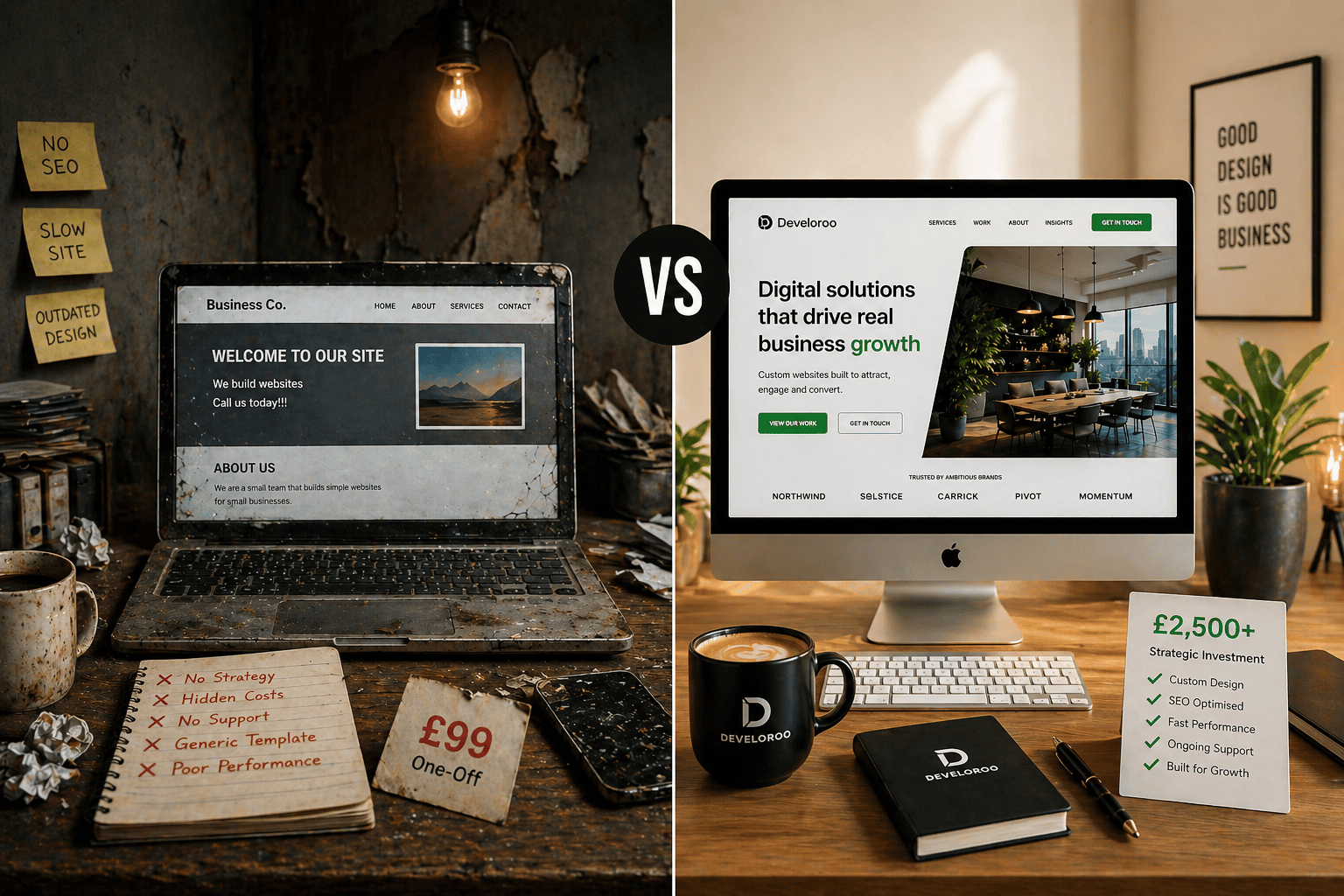
At first glance it sounds like a bargain. If a website is just a few pages and some images, how complicated can it be? The reality is very different. Cheap websites rarely fail immediately. They fail slowly — through poor performance, lack of visibility on Google, limited flexibility, and hidden long-term costs.
By the time businesses realise the problem, they often end up paying twice: once for the cheap website, and again to rebuild it properly. If you’re looking for your website to be built properly – check out our Web Development services page. Otherwise, read on for some truths.
1. Cheap Websites Are Usually Template Builds
Most low-cost websites are built using pre-made templates. That means:
- The layout is already designed
- The structure isn’t tailored to your business
- Features are limited to what the template allows
The result is a website that looks similar to hundreds of other sites online. From a business perspective, this creates two problems:
- It doesn’t differentiate your brand
- It rarely supports proper SEO architecture (Poor SEO = No visibility. Think of a shop hidden away nobody ever walks past)
A proper website should be structured around how customers search, how they navigate your content, and how they convert. Template sites are rarely built that way.
2. “Free Website” Offers Usually Lock You In
One of the biggest traps in the industry is the “free website” model. It’s the oldest trick in the book – build something that looks decent, sell it 1000 times with a different name. Here’s how it normally works. The website build is free, but:
- You must use the agency’s hosting
- You pay a monthly subscription
- You don’t own the website
- Leaving often requires a migration fee
- Negligible SEO optimisation
Some businesses end up paying thousands over time for a website they never actually own. Even worse, these platforms often make it difficult to move your website elsewhere. So if the service becomes expensive or the support disappears, you’re stuck.
3. Cheap Websites Rarely Include Proper SEO
A website that looks nice but doesn’t appear in Google search results is essentially invisible. Many low-cost builds skip fundamental SEO basics such as:
- Page hierarchy
- Keyword targeting
- Internal linking
- Page speed optimisation
- Structured content
These aren’t advanced features — they are the foundations of how search engines understand your website. Without them, even a beautifully designed website can struggle to generate traffic. Businesses then end up investing heavily in marketing just to compensate.
4. Performance Problems Hurt Your Business
Website performance directly affects:
- Google rankings
- User experience
- Conversion rates
Cheap websites often rely on:
- Bloated page builders
- Poor hosting
- Unoptimised images
- Slow scripts
This leads to slow loading times, especially on mobile devices. If a website takes too long to load, visitors simply leave. Google also factors page speed into rankings, meaning slow sites lose visibility over time.
5. Cheap Builds Are Difficult to Scale
Businesses evolve. Your website might eventually need:
- Booking systems
- Ecommerce functionality
- Integrations with other tools
- Custom features
Template websites often can’t handle these changes. When businesses outgrow them, they face a difficult choice: Patch the system repeatedly, or rebuild the website entirely. Most end up rebuilding. Check out our Web Development and Ecommerce Website Development service pages for more info on how we build scalable products for you 🫵🏼 .
What a proper website should include
A professionally built website should provide:
- Clear SEO structure
- Fast loading speeds
- Mobile-first design
- Conversion-focused layout
- Flexible development for future features
Most importantly, it should be built around your business goals, not a generic template. That’s the difference between a website that simply exists and one that actively grows your business.
Final thoughts
A cheap website isn’t always a bad idea for a hobby project or personal blog. But for a business, your website is one of the most important digital assets you have. When it’s built properly, it can generate leads, build trust, and support long-term growth – 24 hours a day connected to every corner of the planet.
Otherwise, it quietly costs you opportunities every day.