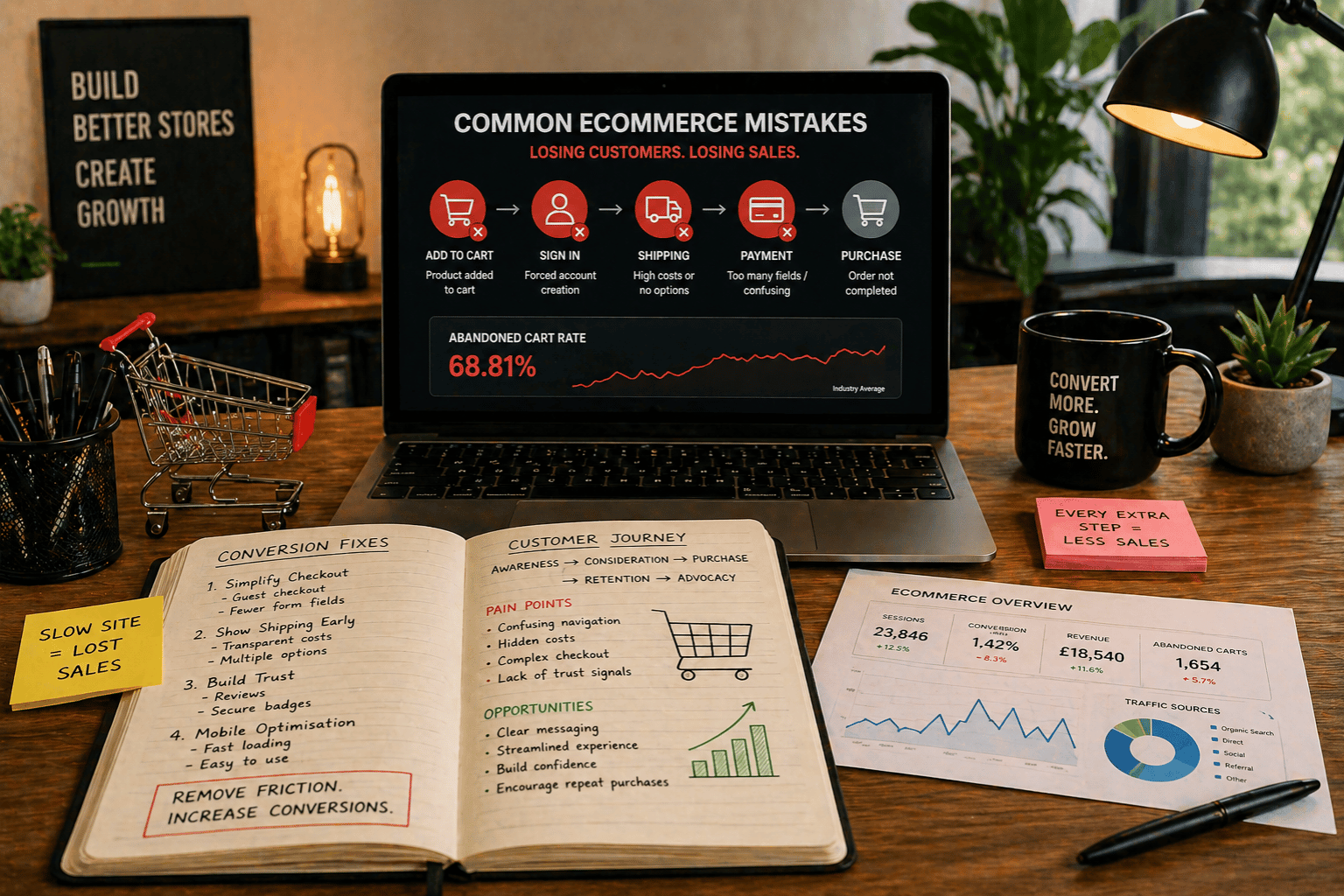
The ultimate guide on what not to do
Launching an ecommerce website is easier than ever. Platforms like Shopify and WooCommerce allow businesses to start selling online quickly. But launching an online store is only the first step. Many ecommerce sites struggle not necessarily because the products are duds — but because the website itself creates friction for customers. Read about the most common mistakes below, or use a cheat code and let us build it for you. Check out our Ecommerce Website Development service.
1. Slow Website Speed
Speed is critical in ecommerce. We’re in an era spoilt by ultra fast internet. If a product page takes several seconds to load, customers often abandon the site entirely. Slow sites are usually caused by:
- large unoptimised images
- poor hosting
- excessive plugins
- bloated themes
Even a one-second improvement in load time can significantly increase conversions.
2. Poor Product Page Design
Product pages need to answer one simple question:
“Why should I buy this?”
Common mistakes include:
- vague descriptions
- low quality images
- missing trust signals
- unclear pricing
Strong product pages include:
- clear benefits
- detailed specifications
- high quality imagery
- customer reviews
3. Complicated Checkout Processes
Every extra step in the checkout process increases the chance of abandonment. Common friction points include:
- forced account creation
- too many form fields
- unexpected delivery costs
The best ecommerce checkouts are simple, fast, and transparent.
4. Weak Mobile Experience
More than half of ecommerce traffic now comes from mobile devices. Yet many stores are still designed primarily for desktop. Mobile ecommerce sites should prioritise:
- fast loading pages
- simple navigation
- easy checkout flows
- large touch-friendly buttons
5. Poor SEO Structure
Many ecommerce stores rely entirely on paid ads for traffic. But organic search can be a huge driver of long-term sales. Common SEO mistakes include:
- duplicate product content
- missing category pages
- weak site structure
- poor internal linking
A well structured ecommerce site helps search engines understand the relationships between products and categories.
6. Lack of Trust Signals
Online shoppers need reassurance. Trust signals might include:
- secure checkout badges
- customer reviews
- clear return policies
- visible contact details
Without these signals, visitors hesitate to complete purchases.
Final thoughts
Ecommerce success rarely comes from launching quickly. It comes from building an online store that is fast, trustworthy, and easy to use. When these fundamentals are done properly, the website becomes more than just a catalogue — it becomes a powerful sales engine.
Think of the points mentioned above, and whether you’ve ever encountered them on an online shopping experience. Chances are the answer is yes more than a few times, and chances are you just closed the page and went elsewhere. Build for inevitability, not speed and watch your business launch to the moon.