The truth behind mobile app development costs
One of the first questions businesses ask when considering an app is simple – “How much does it cost?”.
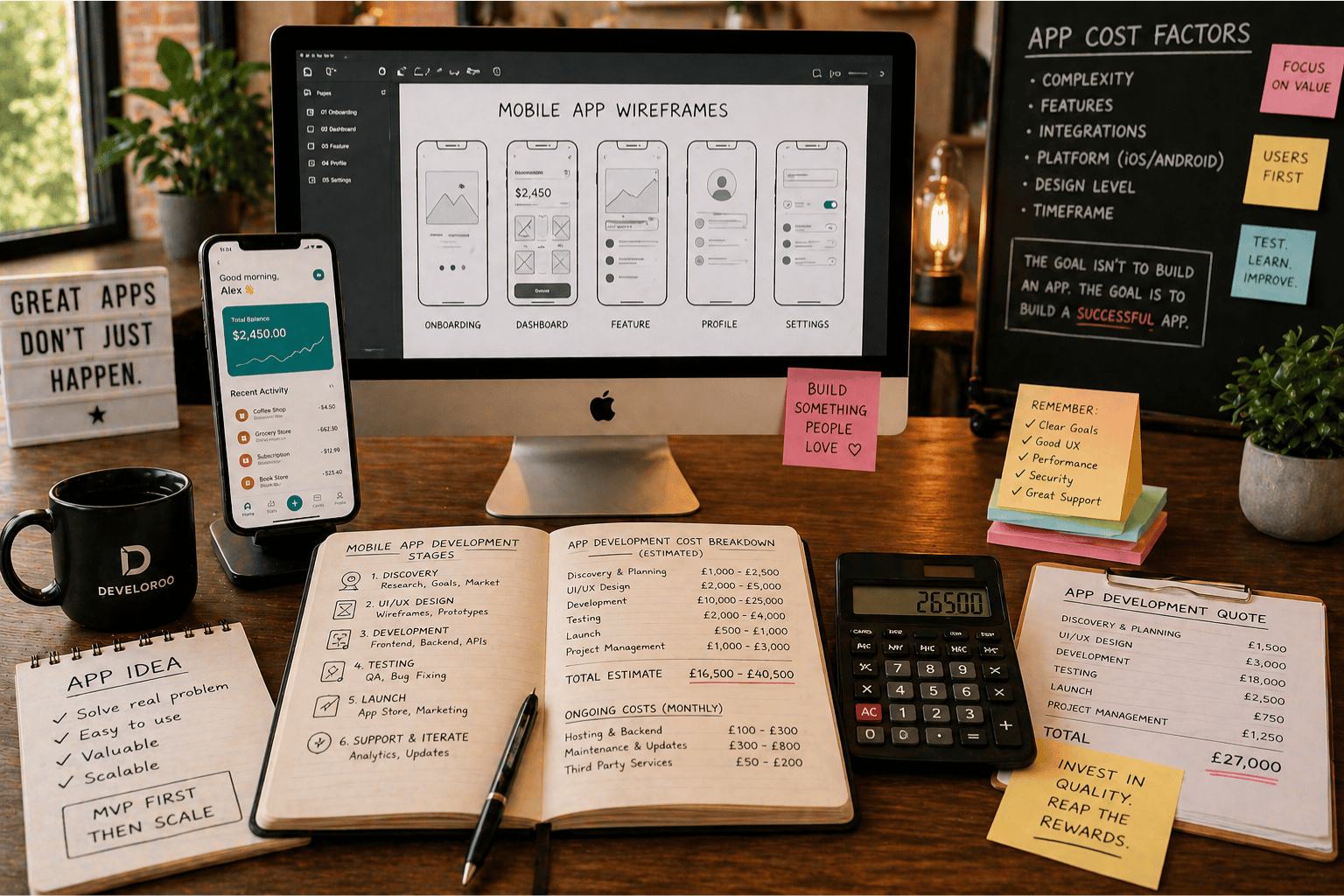
The honest answer is: it depends on what you’re building. Mobile apps can cost anywhere from £3,000 to £20,000+ depending on complexity. While AI coding tools have changed the pace of development, the journey from idea to launch is still a thorough, multi-stage process unless you’re releasing total slop.
That said, most business apps fall into a far more predictable range than people expect. If you’re past the thinking stage and looking to build, check out our Mobile App Development service page for info on how we go about it. Otherwise, let’s break some costs down below.
The biggest factor: App complexity
The cost of building an app is mostly determined by the features it needs.
Simple App Development Costs (£3,000 – £8,000)
These usually include:
- Basic screens and navigation
- Static content
- Simple forms
- Basic integrations
Examples might include:
- Local business apps
- Event apps
- Information portals
Mid-Level App Development Costs (£8,000 – £20,000)
These apps include more advanced functionality such as:
- User accounts
- Databases
- Push notifications
- API integrations
- Booking systems
This is where most startup and business apps sit.
Complex Apps (£20,000+)
High-end apps may include:
- Real-time features
- complex databases
- custom backend systems
- advanced integrations
- large user bases
- AI integration
These often require larger development teams.
Platform choice matters
Another major cost factor is platform development. Traditionally you would need:
- iOS development
- Android development
Two separate builds.
Modern cross-platform frameworks such as Expo and React Native allow developers to build both platforms from a single codebase, significantly reducing cost. The alternative is to build two seperate apps using two different native languages, thus doubling development time.
Design and planning
Before development even begins, apps require:
- user flow planning
- interface design
- feature prioritisation
- technical architecture
Skipping this stage often leads to expensive problems later.
Proper planning ensures the app solves the right problem. That’s not even taking into account brand creation. You could build the most technically superb app on the planet, but if the home screen looks like Windows 2000, you’ll watch your retention drop rapidly.
Backend infrastructure
Many apps require servers or databases to manage data. This can include:
- user authentication
- content management
- cloud storage
- analytics
Services like Firebase (Google owned) or Supabase often make this infrastructure much easier to manage.
Ongoing costs
App development doesn’t end at launch. Ongoing costs can include:
- maintenance
- bug fixes
- feature updates
- hosting and backend services
- app store accounts
For example Apple and Google Play developer accounts cost in the region of £99 and £30 annually, small compared to the initial build but should still be considered.
The smart approach: Start with an MVP
Many startups reduce risk by launching an MVP (Minimum Viable Product). An MVP focuses only on the core features needed to validate the idea. This approach allows businesses to:
- test demand
- gather user feedback
- improve the product over time
Rather than spending £30k upfront, you might start with a much smaller build and evolve the product later. Check out our Startup MVP Development service for info on how we can launch your app idea.
Final thoughts
Mobile apps can be powerful tools for businesses, but they should always start with a clear purpose. The goal isn’t just to launch an app — it’s to build something people actually use. That starts with understanding the problem you’re solving and building the right product to solve it. Check out our service pages for information on what we can build for you.
Mobile App Development Services 📱