Last updated: August 2026
Why Is It So Difficult to Get a Straight Answer?
If you’ve searched online for ecommerce website pricing, you’ve probably realised one thing pretty quickly: nobody seems willing to give you a realistic answer. One company promises an online store for less than the price of a weekly food shop. Another won’t even entertain a conversation unless your budget starts at five figures.
The truth sits somewhere in the middle.
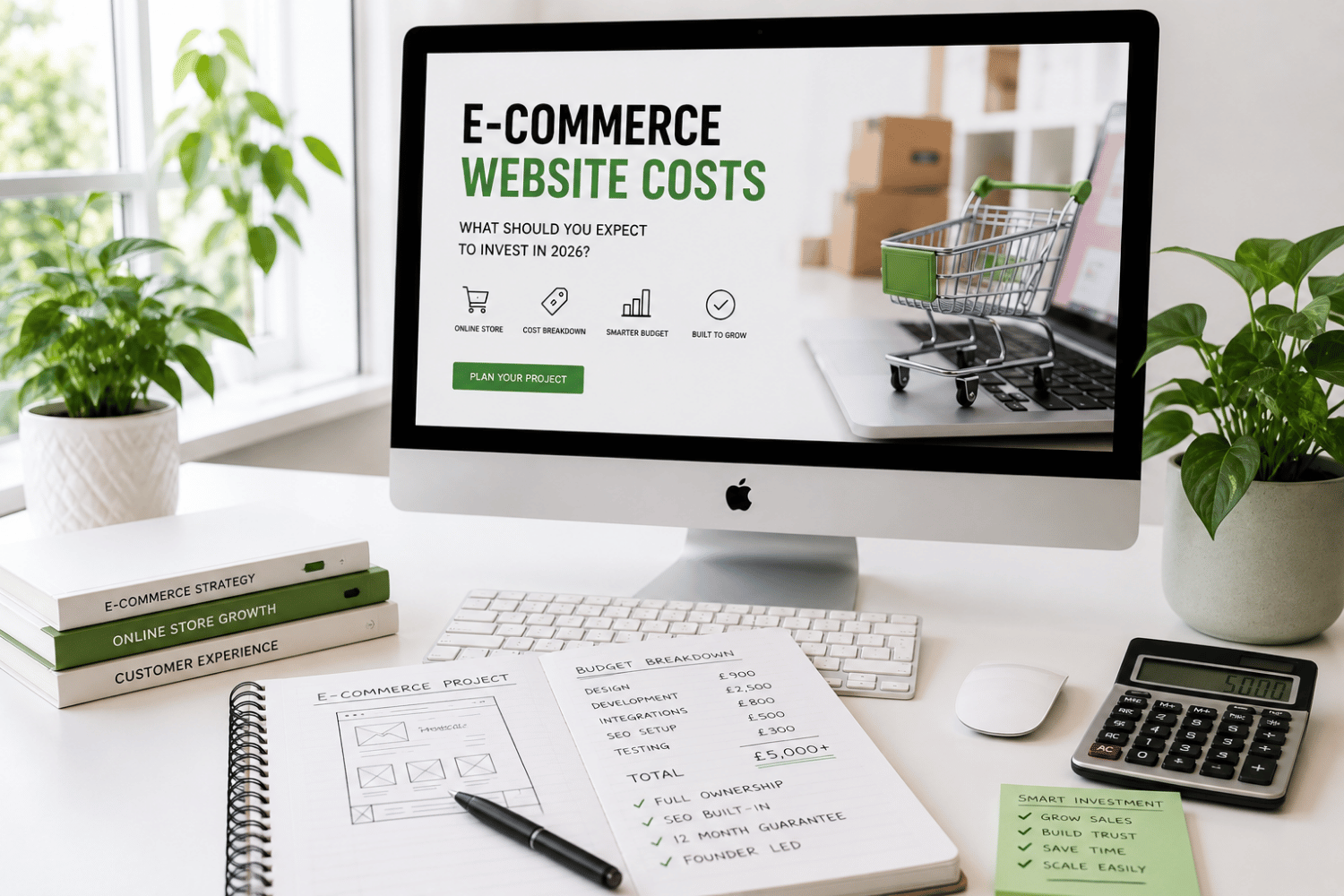
For most established UK businesses, a professionally built ecommerce website typically starts from around £2,500, with more advanced projects ranging from £7,000 and beyond, depending on the functionality, catalogue size, integrations and complexity involved.
We’ve written some thoughts on what actually affects the cost, where your money is being invested, and how to avoid expensive mistakes that many businesses make when building an online store.
Typical Ecommerce Website Costs in the UK (2026)
Every ecommerce business is different, so there isn’t a single fixed price that fits every project. A holiday park with an online booking system has very different requirements from a company selling thousands of fashion items across multiple countries.
As a general guide, here’s what most businesses should expect to invest.
- £2,500+ – Professional ecommerce website for established businesses.
- £3,500–£5,000 – Ecommerce website with additional functionality, integrations and more bespoke features.
- £5,000–£7,000 – Fully customised ecommerce development for growing online businesses.
- £7,000+ – Complex ecommerce platforms with advanced functionality, custom integrations and scalable architecture.
The important thing to remember is this – you’re not just paying for pages. You’re paying for what your website needs to do.
What Actually Affects the Cost?
Two ecommerce websites can look almost identical on the surface while having completely different development costs underneath. Here are some of the biggest factors that influence pricing.
Product catalogue
Selling twenty products is a very different project from selling two thousand.
Larger catalogues often require advanced filtering, product variations, stock management and category structures that take significantly more planning.
Custom design
Template websites are quick.
Custom websites are built around your business, your customers and your goals.
A bespoke design usually delivers a stronger brand experience, better user journeys and higher long-term flexibility.
Payment gateways
Most online stores now offer far more than just card payments.
Depending on your requirements, your website may include:
- Stripe
- PayPal
- Apple Pay
- Google Pay
- Klarna
- Clearpay
- Finance providers
Each integration adds development time and testing.
Shipping rules
Shipping is often far more complicated than people expect.
Your website may need to handle:
- Different delivery regions
- Weight-based pricing
- Free delivery thresholds
- Collection options
- International shipping
- Real-time courier rates
The more rules involved, the more development is required.
Customer accounts
Modern customers expect convenience.
Features such as:
- Saved addresses
- Order history
- Wishlists
- Repeat ordering
- Account dashboards
all improve the shopping experience but naturally add to the overall project.
Business integrations
Many ecommerce websites don’t operate on their own.
They often connect with systems such as:
- Accounting software
- Inventory management
- CRM platforms
- Email marketing software
- Booking systems
- ERP software
- Suppliers ordering systems
These integrations can save hundreds of hours of manual work every year, making them a worthwhile investment for many businesses.
SEO foundations
This is one area that’s often overlooked – and it’s a big mistake.
A professionally built ecommerce website should be structured for search engines from day one. That includes logical page hierarchy, category structure, internal linking, clean URLs, fast loading times and technical SEO foundations. It’s much easier—and far less expensive—to build these in from the beginning than retrofit them later.
Think of the hours you pour into marketing, social media, and trying to gain traction with an algorithm. Or the huge amounts of cash you empty into Google and Meta ads. Why do all of that, but skip on building strong SEO foundations that effectively give you organic sales with no ad spend?
The Cheapest Ecommerce Website Is Rarely the Cheapest Ecommerce Website
Saving money upfront can feel like a win. Until you’re rebuilding everything eighteen months later. We’ve spoken to plenty of business owners who originally chose the cheapest option available, only to discover later that their website couldn’t grow with the business.
Common issues include:
- Slow loading speeds.
- Limited customisation.
- Poor SEO performance.
- Expensive monthly app subscriptions.
- Plugin conflicts.
- Difficult redesigns.
- Migration costs.
- Poor mobile experience.
- Losing trust
Sometimes investing a little more at the beginning is actually the cheaper decision over the life of the website. The goal isn’t simply to launch.
The goal is to build something that continues generating enquiries and sales for years.
Where Should You Spend Your Budget?
If your budget isn’t unlimited, focus on the things that actually move the needle.
Prioritise:
- Fast performance.
- Excellent mobile experience.
- Strong SEO foundations.
- Clear navigation.
- Professional product photography.
- Conversion-focused copywriting.
- Simple, friction-free checkout.
Be cautious about spending heavily on:
- Flashy animations.
- Trendy effects.
- Unnecessary plugins.
- Features your customers are unlikely to use.
- Design gimmicks that don’t improve conversions.
- Ecommerce “courses”, gurus and mentors – don’t buy in to the utopic bait.
A successful ecommerce website isn’t the one with the most features. It’s the one that makes it easiest for customers to buy.
Choosing the Right Ecommerce Development Agency
Before investing thousands of pounds, ask a few simple questions.
- Will I fully own the finished website?
- Is pricing fixed or just an estimate?
- Is professional SEO applied as standard?
- Who will actually build my website?
- Is support available after launch?
- Are there ongoing monthly costs?
- Can the website grow as my business grows?
Clear answers to these questions often tell you far more about an agency than a polished sales pitch ever will.
Final Thoughts
A professionally built ecommerce website isn’t simply another business expense. It’s one of your most valuable sales tools.
While prices vary depending on the project, most established UK businesses should expect to invest from around £2,500 for a professionally built ecommerce website, with more advanced projects ranging from £7,000 and beyond.
The important thing isn’t finding the cheapest quote. It’s investing in a website that genuinely understands your business, delivers a better customer experience, and gives you room to grow without needing to start again in a year’s time.
If you’re planning a new online store—or replacing one that’s holding your business back—take a look at our Ecommerce Website Development service to see what’s included, explore our Pricing page for realistic project budgets, or get in touch for a no-obligation project clarity call. We’ll give you an honest recommendation, even if that recommendation is to spend less than you expected.
Related articles: